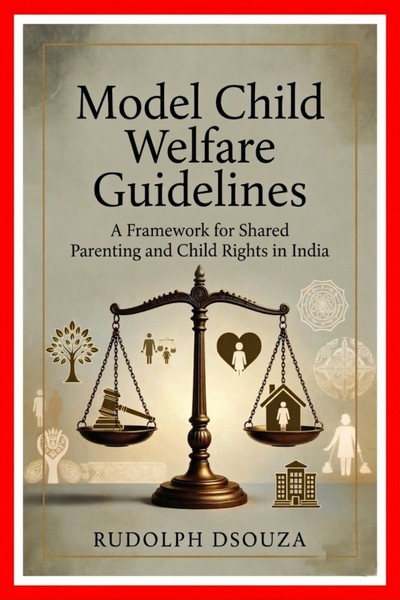
Model Child Welfare Guidelines
A Framework for Shared Parenting and Child Rights in India
by Rudolph Dsouza · 20261024001
★ 5 (1 rating)
The Model Child Welfare Guidelines (MCWG) proposes a landmark framework to reform custodial jurisprudence in India by shifting the focus from toxic, adversarial custody battles to shared parenting and systemic accountability. It provides a structured Standard Operating Procedure (SOP) for policymakers, judges, and family law practitioners that treats the "Best Interests of the Child" as a measurable, actionable outcome rather than a subjective claim.
Born out of empirical data and grassroots advocacy, this book bridges the gap between progressive High Court rulings and trial-court execution. It directly confronts the most severe fractures in the family court system-including parental alienation, identity erasure, weaponized litigation, and visitation denial.
Key Frameworks Addressed:
Time-Bound Relief: Standardized 30-day interim access orders to neutralize delay tactics.
Paternity Integrity: Mandatory DNA protocols to link maintenance with biological certainty.
Financial Guardianship: Ring-fenced Child Welfare Escrows, FDs, and insurance mandates.
Anti-Abduction Rules: Rules preventing jurisdictional flight and unlawful relocation.
The MCWG is an indispensable desk reference and survival guide for family court judges, child welfare committees, legal professionals, and self-represented parents fighting to protect the sacred bond between a child and both parents.
$4.99
Sample
Model Child Welfare Guidelines presents a comprehensive framework for reforming child custody law in India with a focus on equal shared parenting, child rights, and evidence-based family court practices.
w
Designed for policymakers, judges, lawyers, family counselors, and parenting advocates, this book proposes practical model guidelines for custody determination, parenting plans, mediation, and enforcement mechanisms that prioritize the best interests of the child while preserving meaningful relationships with both parents.
Drawing from international best practices and comparative family law systems, the framework addresses critical challenges in the Indian context including:
o Parental alienation
o Shared Parenting
o Interim Visitation / Interim custody
o Gender-neutral custody policies
o Parenting time standards
o Child psychological well-being
o Mediation and dispute resolution
o Enforcement of parenting orders
o DNA test and Parentage
o Judicial accountability and consistency in family courts
o One Stop Solution for all Custody disputes
The book offers model legislative principles, policy recommendations, and court-ready guidelines aimed at supporting a more balanced and child-centered approach to custody decisions.
Whether you are a legal professional, law student, social worker, or parent navigating the family justice system, this work provides a structured roadmap for advancing child rights and cooperative parenting after separation.
A timely contribution to the ongoing conversation on family law reform and children’s welfare in India.
Ratings
Log in to rate this book. You must have reading access.